

Consequential Tuber
The potato fed the world, started a famine, and still shows up for dinner.

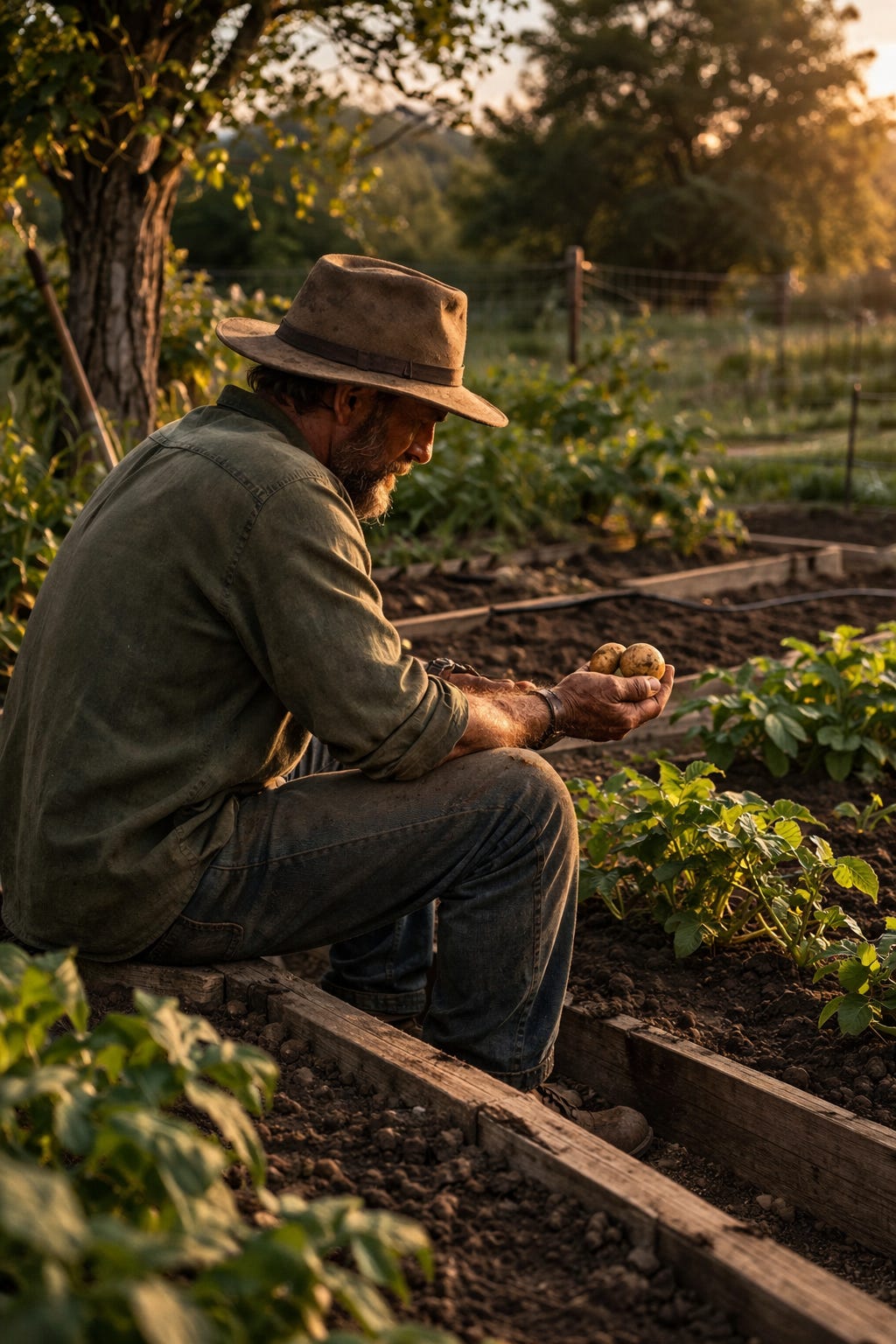
I am sitting on the edge of the beds in the garden, hands in cool Idaho loam, and I am thinking about the Inca.
Not in any grand way. Just the way your mind goes when the work is simple and the sun is on your back and the breeze is moving through the trees. You dig, you amend, you make a place for something to grow. And somewhere in that rhythm the question arrives on its own: what were they thinking about?
Probably this.
Probably exactly this.
Cool soil. The weight of a seed potato in the palm. Whether the rain would come.
At the bottom of lakes high in the Andes — Titicaca, others — there are potato offerings still sitting in the silt. Five hundred years old. Left for gods who were supposed to protect the harvest. The Inca didn’t just plant potatoes. They cultivated them the way a civilization cultivates anything it cannot live without — with ceremony, with prayer.
They had over a thousand varieties. They freeze-dried them at altitude and stored them against famine the way other people stored gold.
The potato was their gold.
In 1984, a team of divers dropped into Lake Titicaca and found them — ceramic vessels, still sealed, sitting in the silt at 18 meters. Inside: dried potato. An offering to Viracocha, the creator god, left there sometime in the 1400s. Whoever placed them believed that what happened next — the harvest, the winter, whether the children ate — depended on that gesture.
They were probably on their knees in a field the morning after.
It crossed the Atlantic in the holds of Spanish ships and rewired European civilization so quietly that most people never noticed until it was already done. Ireland built itself around the potato and then in 1845 a water mold arrived and a million people died and another million left. Ireland has never recovered its pre-famine population. Not to this day.
One crop. One failure.
That’s not a vegetable. That’s a force of nature with dirt on it.
I’ll grow four varieties this year, Yukon Gold, Viking Blue, Pontiac Red, and Huckleberry Gold. They each want something slightly different from the soil and give something different back — texture, sweetness, the way they take a hot pan.
Crystal and I will roast them with olive oil and thyme and the Viking Blues will hold their color and look like something that should be in a museum.
We will eat them at the kitchen table and not think much about it.
That’s the point. The most consequential things become ordinary. That’s how they survive.
I finish the bed, sit back, look at the row.
Somewhere in the Andes, five hundred years ago, someone did the same thing. Sat back on their heels, looked at what they’d made, felt the sun. Wondered if it would be enough.
It was. For a while.
It always is, for a while.
That’s all any of us are doing — making a place in the ground for something we hope comes back.
Great story 😎