

When the Fire Finally Lowered
On losing the kitchen, finding my way through the dark woods, and the woman who helped me rebuild the flame.

The decision to hang up my chef’s coat came on an autumn day as bright and brittle as shattered glass.
I was only in my thirties, but I felt a hundred years old.
For months, I had tried every trick to keep myself in the game.
I outfitted my ankles with newer, more rigid leg braces that chafed my skin raw. I kept a stool tucked in a corner of the kitchen so I could perch for a minute between rushes. I even swallowed my pride and dragged my old wheelchair onto the line during prep a few times, figuring maybe wheels could cheat the pain and buy me a little more time.
We even rearranged the line a bit—moving heavier prep to a lower table so I wouldn’t have to hoist big stock pots so high.
But no matter what modifications I made, the kitchen still broke my body down piece by piece.
Every night I limped home with knotted calves and feet and knees that felt like they were on fire.
Every morning I awoke to the cruel reality that the pain had only dulled to a numb ache, and I had to do it all over again.
It was unsustainable, and deep down I knew it.
I had been living with Charcot-Marie-Tooth disease—CMT—since I was a kid. A degenerative nerve condition that chips away at you over time. It was tightening its grip, nerve by nerve, muscle by muscle.
Still, stepping away felt like ripping out my own heart.
I remember the moment I finally knew it was over.
The leaves outside had turned the color of bourbon and gold, and a cold wind rattled the window of my tiny restaurant office. I was sitting there after another brutal lunch, trying to calculate food costs with shaking hands. My legs were propped on another chair because I couldn’t bear any weight on them just then.
The numbers on the screen blurred together.
I realized I hadn’t felt two of my toes in days; they were just... gone, nerves fried to nothing.
When my sous chef knocked on the door to ask me a question, I couldn’t even stand up to greet him. I just stared at my swollen feet and, in that moment, something inside me broke.
“This is it, I thought. I can’t keep this up without destroying myself and dragging everyone down with me.”
I cleared my throat, told him we’d talk later, and the words tasted like ash in my mouth because I knew I was lying.
I didn’t know everything in that moment, but I knew enough—there wasn’t going to be a “later” for me in this or any other professional kitchen.
Walking out of that kitchen for the last time was one of the hardest things I’ve ever done.
I waited until after closing, when everyone had gone home. I couldn’t bear a big scene or drawn-out goodbyes.
I hung my trusted apron on its hook, folded my stained chef coat and left it on the metal prep table.
The quiet was deafening—no clatter of pans, no yelling, just the hum of the fridge and the distant chirp of crickets outside.
I pressed my palm against the butcher block station where I’d chopped and plated a thousand nights, trying to memorize its grooves and scars.
My eyes burned but I refused to cry in that moment.
Instead, I took a deep breath of the familiar air—onion, grease, a whiff of wood smoke from the grill—and then I limped out the back door into the cool fall night.
Outside, the world seemed unnaturally still.
The smell of pine and distant chimney smoke hung under the moonlight.
My car was the only one left in the gravel lot.
I collapsed into the driver’s seat, and only then did the tears come hot and heavy.
I pounded the steering wheel and screamed a string of curses into the empty night: at my body, at fate, at the cruelty of it all.
It wasn’t fair.
It wasn’t fucking fair.
I had given everything—my sweat, my creativity, my very soul—to this career, and now my own nerves and muscles were yanking it all away from me.
In that moment I felt utterly alone, like a useless husk whose best days were behind him.
Eventually the rage subsided to hiccupping sobs and then to exhausted silence.
I drove home under a canopy of trees shedding their leaves, feeling like I was shedding my own identity along with them.
The weeks after I left the kitchen bled together in a gray haze.
For the first time in over a decade, I had nowhere I needed to be at 5:00 AM.
No dinner service adrenaline, no tickets to fire, no purpose.
I slept a lot—or rather, I lay in bed a lot, since actual sleep was fitful and haunted by stress dreams of kitchen chaos I could no longer control.
I avoided phone calls from my old crew because I couldn’t face their sympathy or their attempts to convince me to come back in some reduced role. I couldn’t come back.
In those first weeks, I hardly cooked anything more complicated than toast.
The sight of my knives on their magnetic strip made my chest hurt, a physical ache of longing and loss. So I ignored them.
I’d hobble to the couch, prop my failing feet on a pillow, and lose myself in mindless TV or sit staring out the window for hours as the autumn rain fell.
Eventually, the money I had saved started running low, and I had to think about what the hell to do next.
For a while I toyed with the idea of going back to school. Cooking was all I’d ever known, but now that it was off the table, maybe I could reinvent myself.
I enrolled in a local college for the spring semester, figuring I’d work toward something—a Business degree maybe, although I had at first failed at business. Running restaurants had at least given me a crash course in that.
The first day I rolled across campus in my wheelchair with a backpack slung over my shoulders, I felt like an alien.
I was surrounded by nineteen-year-olds in hoodies rushing to classes, eyes on their phones, full of youthful energy that only highlighted how damn tired and out of place I felt.
In lectures, I tried to pay attention, but my mind kept drifting back to the kitchen.
I’d be sitting in class and suddenly I’d catch myself remembering the exact sear on a duck breast I cooked two years ago, or the smell of thyme and garlic wafting from a stockpot.
More than once I looked down at my notes and saw I’d doodled little chef’s knives and flames in the margins instead of formulas or dates.
I finished that first and final semester out of pure stubbornness, but I knew I wouldn’t be signing up for another.
After that, I drifted.
I took a miserable temp job stuffing envelopes in a dim office, which lasted all of six weeks before I quit in disgust.
I tried to convince myself that maybe I could be content with a quiet, ordinary life—that maybe passion was a young man’s game, and I’d had my turn.
But God, that thought just made me feel dead inside.
I was only in my forties now, yet moving around like an old man and feeling hollow to the bone.
Depression settled over me like a constant drizzly fog.
I didn’t want to see anyone.
I barely left the house except for doctor appointments.
It was around that time that Crystal stepped back into my life and became my biggest champion.
We had met in high school, part of the same friend group—and after years apart, fate threw something sweet into the bitter mix of that season.
From the start of our reconnection, she saw me—not just a broken chef or a man with canes and braces and a wheelchair.
Before my surgeries, when I was still hobbling around on crutches, she’d come by with bags of groceries from the local market, determined to cook alongside me.
At first, I was hesitant—ashamed at how slow and limited I’d become—but she had a kind of quiet persistence that disarmed all of that.
One night, still early in our relationship, I attempted to make us risotto.
Halfway through, my leg gave out from fatigue and I practically fell into the stove.
I cursed loudly out of pride.
Crystal didn’t recoil or rush to take over—she simply slid a chair behind me and said,
“Sit, chef. I’ll stir for a while.”
“We finished that damn risotto together… seasoned with acceptance.”
I looked up to protest and saw nothing but love and calm steadiness in her face.
So I let her stir.
We finished that damn risotto together, arm in arm at the stove, her hand always close to mine to help ladle broth if my grip faltered.
It turned out delicious—perhaps the best I’d ever made, because it was seasoned with acceptance.
After that night, and other moments like it, I knew I’d found someone rare.
She became my partner in every sense.
If I needed help carrying a pot, she was there.
If dark doubts crept in late at night, whispering that I wasn’t really a chef anymore, she’d remind me of all the people I’ve taught and fed, all the lives I’ve touched with my food and words.
“You’re a chef, babe—just a new kind,” she’d say, before nudging me to get some sleep.
One bitterly cold evening toward the end of winter, Crystal and I decided to do something a little crazy to celebrate how far we’d come.
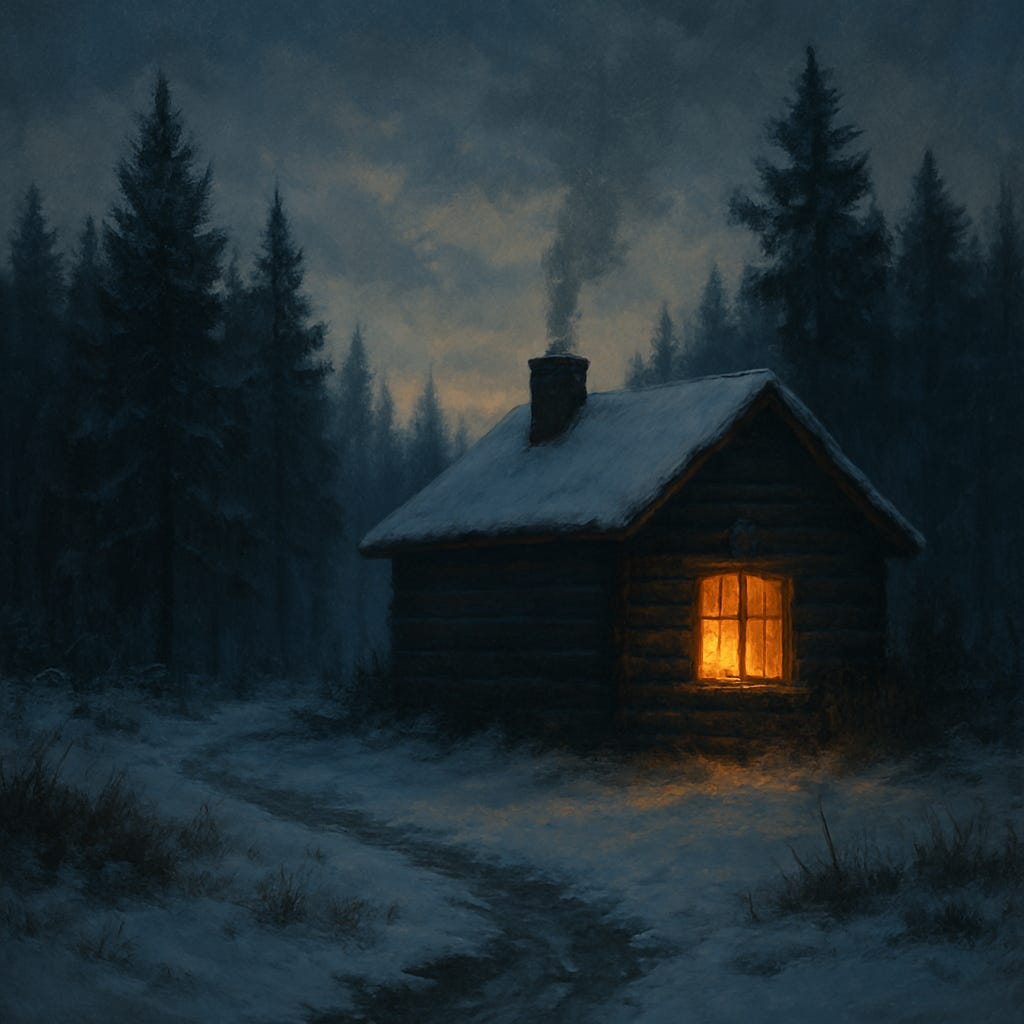
We packed up her truck and a cooler with a couple days of food and drove out to a nearby farm, renting a tiny house where tall pines blanket the hills.
There, as daylight faded, we built a small fire in the woodstove.
The wood caught flame and crackled, sending up sparks and a ribbon of smoke that wound its way up the stovepipe toward the star-pricked sky through the towering silhouettes of the trees.
I tended the fire and the food—herb-rubbed tuna steaks—moving more slowly than I once might have, but with steady assurance.
The winter air was filled with the aroma of woodsmoke and roasting fish, primal and comforting.
Crystal poured two mugs of hot tea from a thermos and we clinked them in a quiet toast.
As we sat side by side, watching the flames dance, I felt an overwhelming sense of peace settle in my chest.
This was my life now: different from the frenetic restaurant years, yes, but rich and real in all the ways that count.
I had my fire back—literally and figuratively—and it was warming more than just my own soul.
In the glow of the fire, I could see the contentment on Crystal’s face as she leaned her head on my shoulder.
I could feel the strength in my own heart, a hard-won resilience that no winter chill could snuff out.
Smoke rose through the trees, carrying with it the laughter we’d shared and the scent of the feast we were about to enjoy.
That smoke carried memories too—of every meal that had led me here, of every person who had been part of my journey.
“Smoke in the Pines wasn’t poetry — it was the truth of the life I was living.”
I realized that “Smoke in the Pines” wasn’t just a poetic notion; it was the very essence of the life I was living.
It was the blending of earth and fire, struggle and grace, past and present.
In that moment, I understood that I hadn’t lost my identity as a chef at all.
I had simply stripped it down to its purest form.
Chef, storyteller, teacher, survivor—they were all facets of the same spirit within me.
The winter night was silent around us except for the crackling logs, but inside I felt a symphony of gratitude.
I thought of my crew from years ago, of my family, of mentors and friends, and of course of Crystal, and I wished somehow I could tell my younger self, standing desperate and defiant in some hot kitchen, that it was going to be okay—that he would find his way out of the dark woods.
As the last of the tuna cooked and we prepared to eat in front of the warm glow of the fire, I breathed in that pine-scented smoke and smiled.
My journey wasn’t over—far from it.
But I had found my path forward, lit by the fires I’d tended and the love I’d been given.
And for the first time in a long time, I felt truly at peace with all of it.
So beautifully written 🙏